
On Writing my Dad's Eulogy

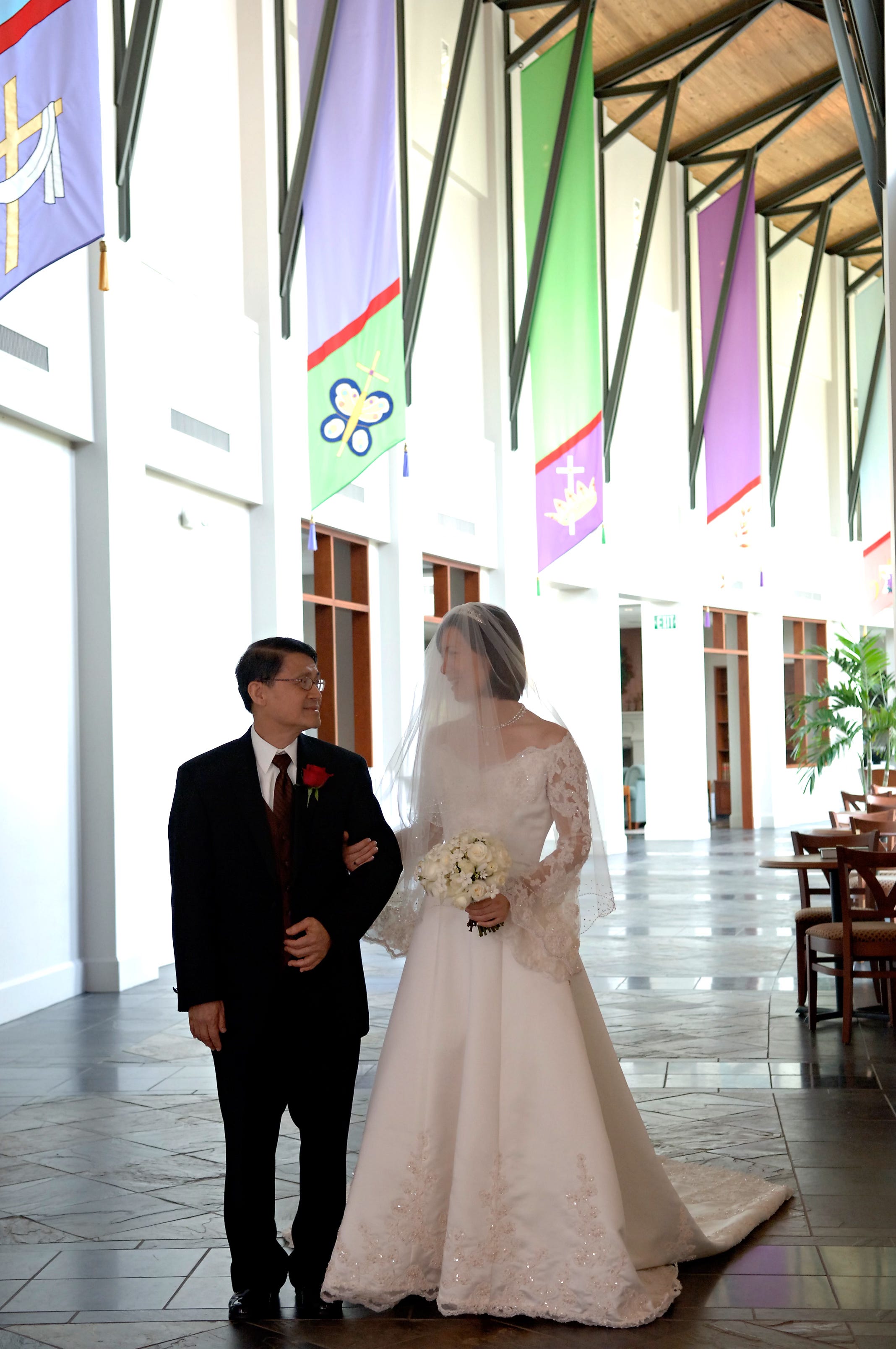
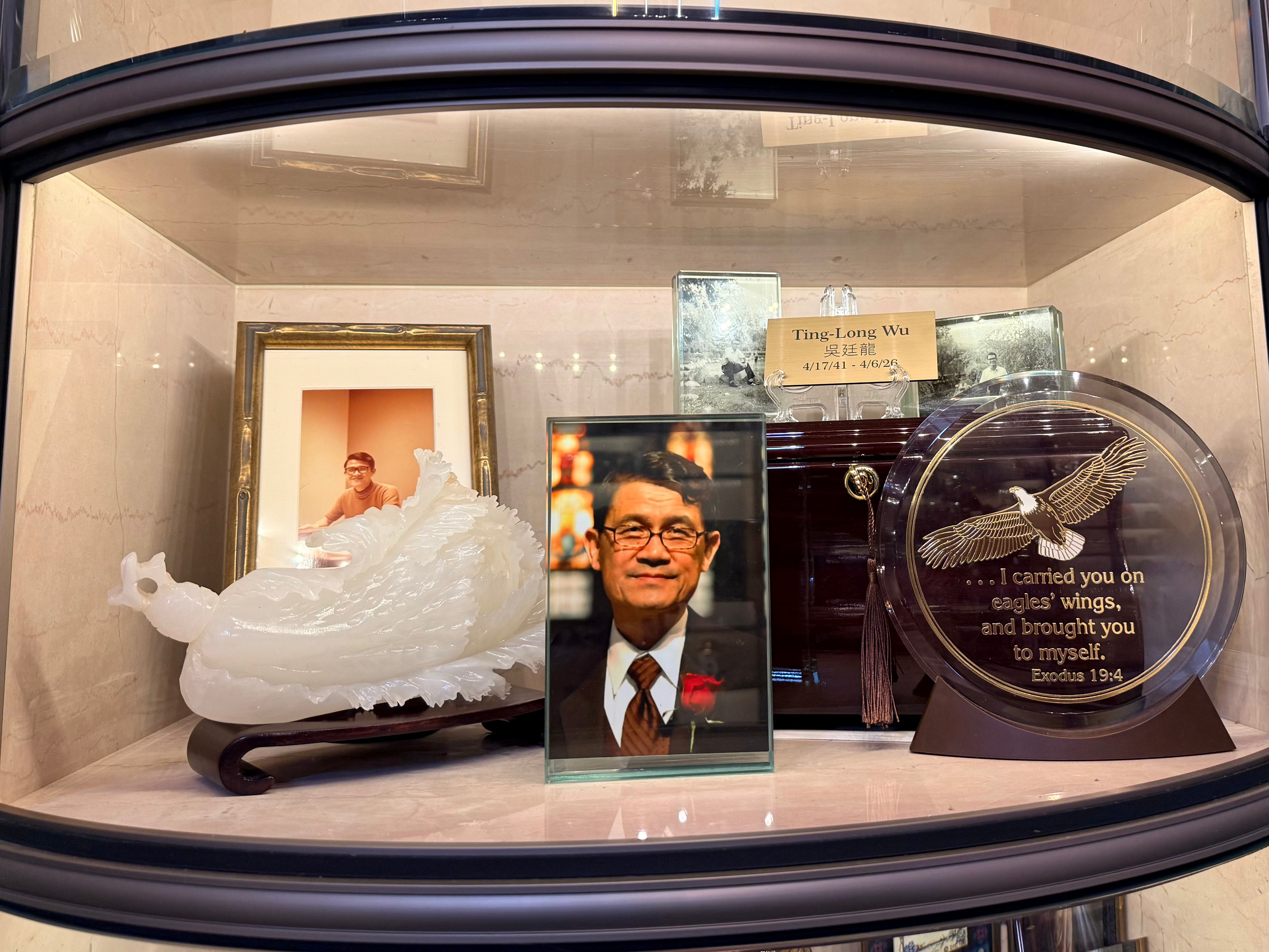
My father died on Easter Monday, April 6, 2026, right smack in the middle of spring. Considering how much psychological suffering he experienced in his lifetime, the date and season on/in which he fell asleep in the Lord felt like both a consolation and a promise. There are images of resurrection everywhere. Then, when the Lord paved the way for us to have his funeral and committal service on his birthday this past Friday, it felt like a Creator’s embrace—the date of his death and the day of his committal serving as divine bookends.
The 11 days between those bookends, however, were among the saddest ones I have ever experienced. The grief peaked on the Wednesday before the funeral as I was attempting to write my dad’s eulogy. It was crushing. For four decades, I had lived in a state of ambiguous loss around my dad’s existential pain and the way it affected our relationship. But when he died, all those decades of ambiguity transitioned at once into an enormous weight of concrete loss. In a condensed period of time, I was faced with having to make some kind of sense out of his 85 embattled years on earth and my own inextricably linked 52 years as his daughter. It was a tall order considering the fact that at different points along the way, I had been a powerless witness to, a victim of, a partial contributor to, an escapee from, and a trusted, comforting companion to my dad’s suffering. I had been the young child who cried, “How long, O Lord?” on my own behalf as well as the adult child who cried, “How long, O Lord?” on his behalf. On April 6th, God answered both of those questions. Sometimes we wait a long time.
As you might imagine, I’ve had a lot of time and many occasions to develop a theology of suffering. I think this passage from Eugene Peterson’s Five Smooth Stones for Pastoral Work (p.114) encapsulates it best for me:
The biblical revelation neither explains nor eliminates suffering. It shows, rather, God entering into the life of suffering humanity, accepting and sharing the suffering. Scripture is not a lecture from God, pointing the finger at unfortunate sufferers and saying, “I told you so: here and here and here is where you went wrong; now you are paying for it.” Nor is it a program from God providing, step by step, for the gradual elimination of suffering in a series of five-year plans (or, on a grander scale, dispensations). There is no progress from more to less suffering from Egyptian bondage to wilderness wandering, to kingless anarchy, to Assyrian siege, to Babylonian captivity, to Roman crucifixion, to Neronian/Domitian holocaust. The suffering is there, and where the sufferer is, God is. “Surely he has borne our griefs and carried our sorrows.” (Isa. 53:4)
I’m happy to report that in the end, through the prayers of many people, the ministry of angels, and the power of the Holy Spirit, my heart settled and the sentences for the eulogy came together. The following is the eulogy I delivered at my dad’s funeral on April 17th, lightly edited for publication here.
A Eulogy for my Dad
When someone we love dies, we’re often left holding many different truths about that person—truths that generate many different feelings at once. Because people—and life—are complicated. That’s certainly the case for me as I remember my dad.
One of those truths is that he was a genuinely sweet and loving father. When I was little, one of my favorite bedtime routines was his carrying me to my room on his shoulders while he sang “Huǒ chē kuài fēi,” which, roughly translated, means “The Train Flies Fast.” I can still hear his voice in my head.
   火  車    快    飛,  火    車    快  飛   [The train flies fast, the train flies fast]
Huǒchē kuài fēi, huǒchē kuài fēi
 飛    過   高    山,     越    過   小   溪  [Over tall mountains, over small streams]
Fēi guò gāo shān, yuè guò xiǎo xī
不   知   走  了幾 百 里      [Who knows how many hundreds of miles it’s gone]
Bù zhī zǒu le jǐ bǎi lǐ
  快     到  家 裡, 快     到  家 裡    [Almost home, almost home]
Kuài dào jiā lǐ, kuài dào jiā lǐ
  媽  媽 看   了   真      歡 喜       [Mom is so happy to see that]
Māma kàn le zhēn huānxǐ
Once I was in bed, we’d rub noses, he’d pull the covers up to my chin, and we’d say goodnight. It’s one of my favorite memories from childhood.
My dad was absolutely the kind of father who would go the extra mile to make us happy. His own childhood had been characterized by extreme poverty and deprivation, so it was truly a dream for him to be able to do nice things for us. When “Return of the Jedi” came out in 1983—I was ten and David was six-and-a-half at the time—he got up early in the morning on opening day (I think it was still dark outside) to go stand in a ridiculously long line at the box office that wrapped around the building several times. Hours later, he returned home smiling from ear to ear, holding up four tickets to the next day’s show. We were caught up in a fever, a cultural moment, and Dad delivered. Getting to watch that movie on its opening weekend is still to this day the most exciting movie-going experience I have ever had.
Another truth about my dad is that he was brilliant in a mad genius sort of way. His head was so constantly filled with scientific thoughts that he figured everyone else’s must be too. If you gave him an opening, and even if you didn’t, you could very well find yourself in the middle of a discussion about a new flash tank design for the current slurry loop reactor… or the safest way to add ethylene oxide—a very volatile substance—in polymerization reactions if you want to increase the synthesis of polyether polyols by 25%. He would often go to sleep thinking about an engineering problem and wake up in the middle of the night with sudden insight about how to solve it.
But he also had this childlike ability to find pure delight in simple things: a scoop of ice cream, a perfectly ripe pineapple, a really comfortable pair of socks, a soft T-shirt, a phone call from a friend, chocolate.
Outwardly, my dad’s life looked like a classic rags-to-riches story. He was born into a world at war that then became a society shaken up by political instability. It forced his father to have to travel extensively to find employment, which plunged his family of six into extreme poverty. Back then, if you didn’t have money, your education stopped at elementary school. But because my dad showed exceptional aptitude in school, a distant cousin who operated a pharmacy offered to help pay for his middle-school and high-school education. From then on, it seemed like all the lights changed from red to green.
He developed a strong friend group in school and was so well-liked by his peers that he was voted class president almost every year. He got into a top-tier college, which by then he was able to pay for by working as a tutor. He graduated college at the top of his class. And then, as if the dream could only get bigger and better, he was offered a full scholarship to the graduate program in the engineering school at the University of Houston, where he eventually got a PhD in chemical engineering. Five years later, he was earning a good salary at an engineering firm, was married with two children, living in his own house in the suburbs of Houston, Texas, and standing in a long line to buy tickets for the most anticipated movie of the year. If that doesn’t fit the definition of the American dream, I don’t know what does.
What people didn’t see was the real cost he paid to leave behind his home country, his family of origin, and his deep sense of belonging. In significant ways, he never recovered from this relocation and the changes that came with it. For him, who possessed a beautifully sensitive soul, the move to America was far more than a geographic change. It was a tectonic shift that resulted in a permanent state of disorientation. He lived with deep anxiety and with intrusive thoughts that caused him constant distress. These challenges affected our family, as you can imagine. There were numerous moments that were confusing, overwhelming, and painful. None of us knew where to turn for help.
About twelve years ago, when my mom went through a lengthy debilitating illness, my dad came to live with me and my family for three months. During that time, I asked him what had kept him going all these years amid his psychological pain. He matter-of-factly said, “You kids. I knew I had to find a way to keep going for you and David and your mom, no matter what.” When I responded, “I’m sorry it’s been so hard for you,” he shrugged and said, “Eh, that’s life.” What could I do but stare at him in wonder? That’s selfless, sacrificial love and longsuffering in its purest form.
When I was young, I thought of his mental health struggles and his gentle, non-assertive personality as indicators of weakness. But now it’s obvious to me that he is the strongest person I have ever known and probably will ever know.
My dad suffered a devastating traumatic brain injury in June of 2023, complicated by progressive dementia. As a result, he spent the last 2-½ years of his life in memory care. What’s remarkable about this period is that similar to the first 82 years of his life, the simple outward story—in this case it was “the poor elderly man who fell and became disabled”—did not reflect the truer, deeper story that was taking place below the surface. The brain injury, as horrible as it was, relieved him of the intrusive thoughts that had plagued him for decades, but somehow without altering his basic loving personality or his core memories. Sure, there were significant impairments as well as alterations to the way he recalled details, but for a good while he was still able to tell funny stories, access shared memories, laugh at people’s jokes, and enjoy the company of his family members and peers. He cried tears of joy and empathy whenever he was moved (which was often) and showed appreciation to his caregivers. At one point, he said to my mom, “Do you know… I live like a king here. People prepare my meals, which magically appear before me. I never have to cook. People clean my room. They change my bed linens. They dress and undress me. They bathe me. They do my laundry.” I thought, “Wow, I hadn’t really thought about it that way. I mean, I guess that IS the way kings used to live!”
He never once felt sorry for himself. Not for one minute.
Today, I celebrate my dad and his enduring legacy. I’m so proud of who he was. I love him, I will miss him, and I look forward to seeing him again some day. For now, I rejoice that he is finally at rest in the presence of our Lord Jesus Christ. Happy birthday, Dad.
Judy, wow. I am reading this late, having also lost my own Dad. This is more than beautiful. I particularly like this, "For him, who possessed a beautifully sensitive soul, the move to America was far more than a geographic change. It was a tectonic shift that resulted in a permanent state of disorientation. " I have themes of exile and movement knocking around in me and I constantly think about paradox. Thank you for this gift--I am going to quote you one day :).
Thank you Judy. What a beautiful benediction over your father’s life.